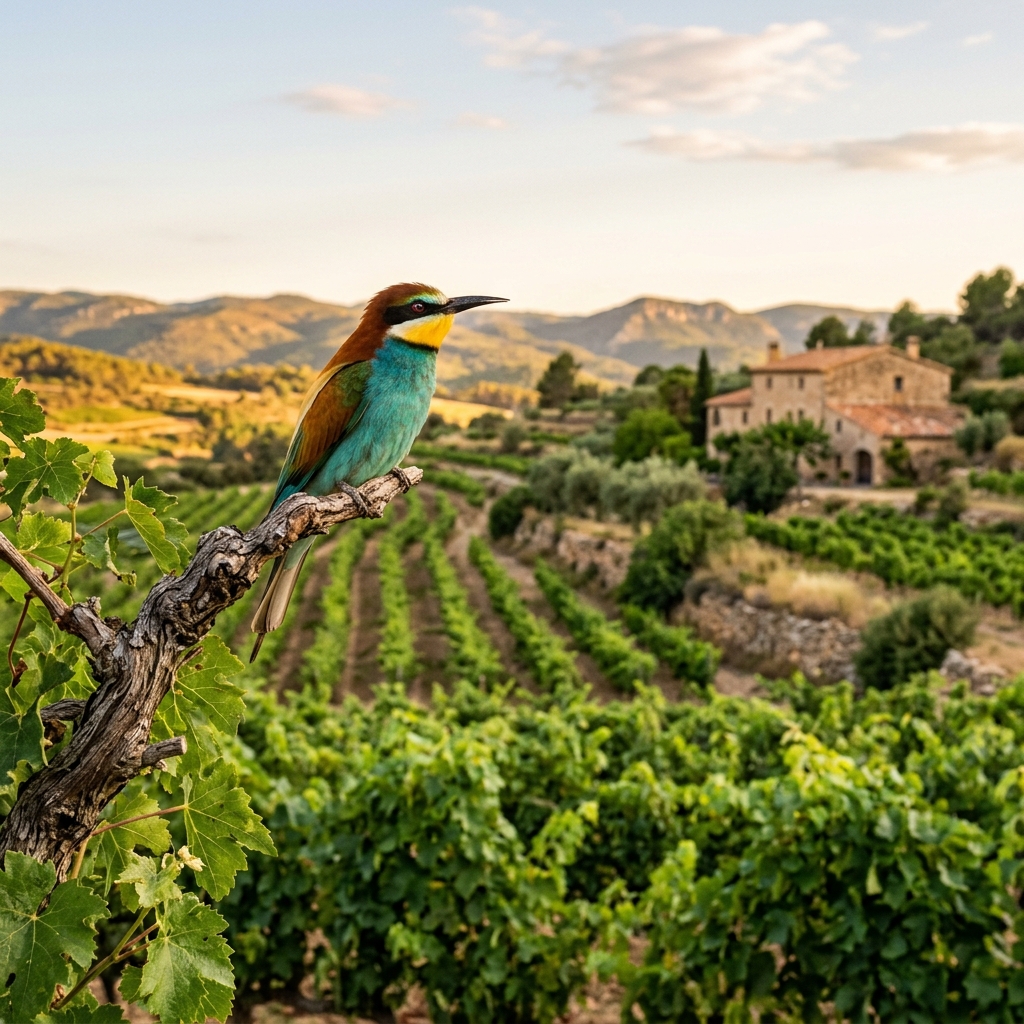
It is easy to treat birdwatching and food as separate activities — one for the morning, the other for the afternoon. But in the Valencia region, the landscapes that produce the most interesting birds and the landscapes that produce the most interesting food are often the same place. The rice paddies, olive groves, vineyards and wetlands of eastern Spain are simultaneously wildlife habitat and agricultural land, and understanding one helps you understand the other.
This is not a metaphor. It is ecology.
Rice and the wetland birds
The Albufera rice fields have been managed continuously for over a thousand years, and the current layout of the wetland — the network of channels, bunds, flooded fields and permanent lagoon — is largely the result of centuries of agricultural activity. Flamingos, herons, Purple Swamphen and the globally threatened Marbled Teal are all here partly because rice farmers maintain a particular water regime that suits both crops and wildlife.
When the rice harvest ends in October and the fields are flooded for the winter, thousands of birds move in. Egrets, Night Herons, White Storks and Lapwings work the shallow water. The same fields will be planted again in spring. The bird and the food cycle are inseparable — and the rice that feeds the birds in autumn is the same rice that ends up in paella valenciana.
Olive groves and their birds
The old olive groves of the Inland Valencia — some with trees several centuries old — support a suite of birds that are hard to find in younger, more intensively managed landscapes. Hoopoe nests in hollow trunks. Scops Owl calls from the canopy at dusk. Serin, Greenfinch and Goldfinch feed on seeds at the field margins, while Song Thrush and Blackbird work through fallen olives in winter.
The olives harvested from these groves — later than in more mechanised operations, to allow the fruit to ripen fully — produce oil with a distinct character. The diversity of the grove and the diversity of the oil are different expressions of the same place. A monoculture grove, cropped efficiently, produces neither.
Vineyards and open-country birds
The wine country around Requena and Utiel, in the high plateau west of Valencia, is steppe-like in character — flat, dry, with low scrub between the vines and a cold winter that pushes the growing season into late summer. Calandra Lark and Stone Curlew breed on the open ground between vineyards. Little Bustard still occurs in small numbers where cultivation remains traditional. Montagu's Harrier hunts over the cereal fields that border the vineyards.
These birds are indicators. Their presence tells you something about the land management — that the soils haven't been compacted by heavy machinery, that insect populations are intact, that the landscape has not been simplified. The wine from these villages reflects the same conditions: the altitude, the temperature range, the low yields that produce the Bobal grape's characteristic character.
Wetland fish and fishing birds
The Albufera lagoon has supported a traditional fishing economy since medieval times. Eel, grey mullet and sea bass move between the lagoon and the sea through the three channels that connect them. The same channels, at dawn, attract Grey Heron, Great Cormorant, Common Kingfisher and Little Egret — all of them working the same fish stocks as the traditional fishermen of El Palmar.
The eel, now critically endangered and barely present in the lagoon, was once the foundation of the local diet. Its decline is visible to both birder and cook. The Kingfisher, which once caught small eels as part of its diet, now feeds almost entirely on introduced fish species. Food ecology and wildlife ecology converge at the same point.
A different way to read a landscape
Most birding guides tell you what birds to look for and where. This one suggests that the where is more interesting when you understand the why — why these species are here, what sustains them, and how that same sustaining structure produces the food on the table at the end of the day. In Valencia, the connection between the two is unusually direct and unusually legible.
Our gastronomy and territory routes combine birdwatching with visits to the producers — rice farmers, olive millers, winemakers — who maintain the landscapes that make the birding possible.
Explore gastronomy routes